

Making Digital Evidence Easier to Understand
Digital Investigation, Arranged by Topic
-
Flow Course
Regular price €197,00 EURRegular price -
Flux Bundle
Regular price €173,00 EURRegular price -
-
-
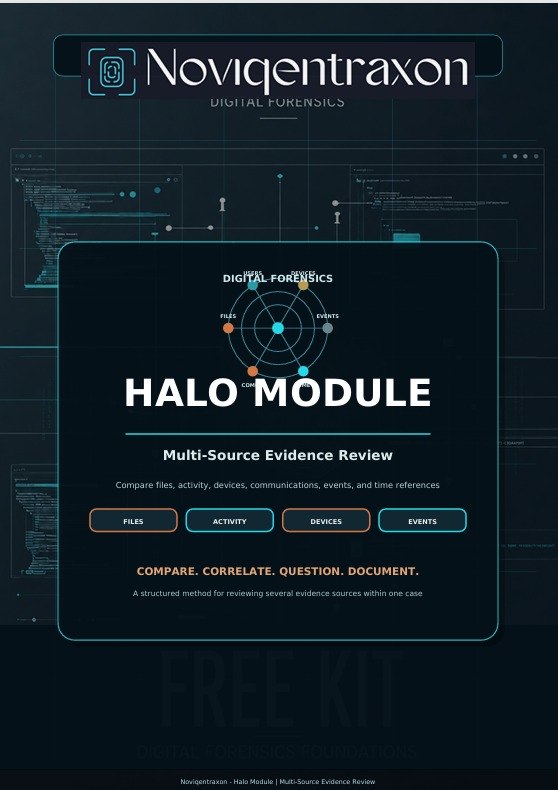
Halo Module
Regular price €208,00 EURRegular price -
Luma Series
Regular price €251,00 EURRegular price -
Nexus Series
Regular price €298,00 EURRegular price -
Pulse Pack
Regular price €76,00 EURRegular price


Built from a Need for Clearer Forensic Learning
Notes from Learners in the Field
-

Camden Hale
Camden began the course with a general interest in Digital Forensics but found it difficult to understand how evidence handling, timelines, file activity, and reporting fit together within one investigation. The structured modules and connected case examples were useful because they showed how each forensic task supports the next stage of review. “The materials helped me organize the subject into a clear process instead of treating every topic as a separate technical detail.”
-

Maren Whitlock
Maren started with experience in administrative review work but had limited familiarity with digital evidence categories and forensic documentation methods. The clear explanations and guided scenarios were useful because they introduced technical ideas gradually while showing how records, timestamps, users, and devices can relate within a case. “The examples made it easier to understand what should be recorded, what should be compared, and what should remain unresolved.”


30-days refund guarantee
Available on all devices


Begin with a Free Digital Forensics Resource
What Supports Your Forensic Study
-

Clear Structure
Lessons follow an organized sequence that connects forensic terminology, evidence review, analytical methods, and reporting within one learning path.
-

Practical Scenarios
Fictional investigation cases help learners apply course concepts to evidence records, organized timelines, file activity, and documented findings.
-

Careful Analysis
Activities encourage learners to compare several evidence sources, identify inconsistencies, and avoid conclusions that are not supported by available records.
-

Guided Route
Worksheets, evidence tables, and reporting exercises help learners organize observations and maintain clear references throughout a digital investigation.


The People Behind the Learning Materials
-

Elowen Vance
Evidence Preservation Specialist
Elowen focuses on the careful handling, recording, and preservation of digital evidence. She prepares evidence registers, tracks review actions, and maintains clear links between findings and original sources. Her work supports consistent documentation throughout each stage of an investigation.
-

Daxton Merrow
Forensic Timeline Analyst
Daxton studies timestamps, event records, and file activity to arrange digital events into readable sequences. He compares several sources before documenting possible connections between actions. His work also includes identifying timeline gaps, conflicting dates, and incomplete records.
-

Evren Calloway
File Metadata Analyst
Evren examines file properties, details, storage locations, and difference in document versions. He compares metadata with other digital records to add context to investigation timelines. His work includes documenting inconsistencies and noting where further examination may be required.


